
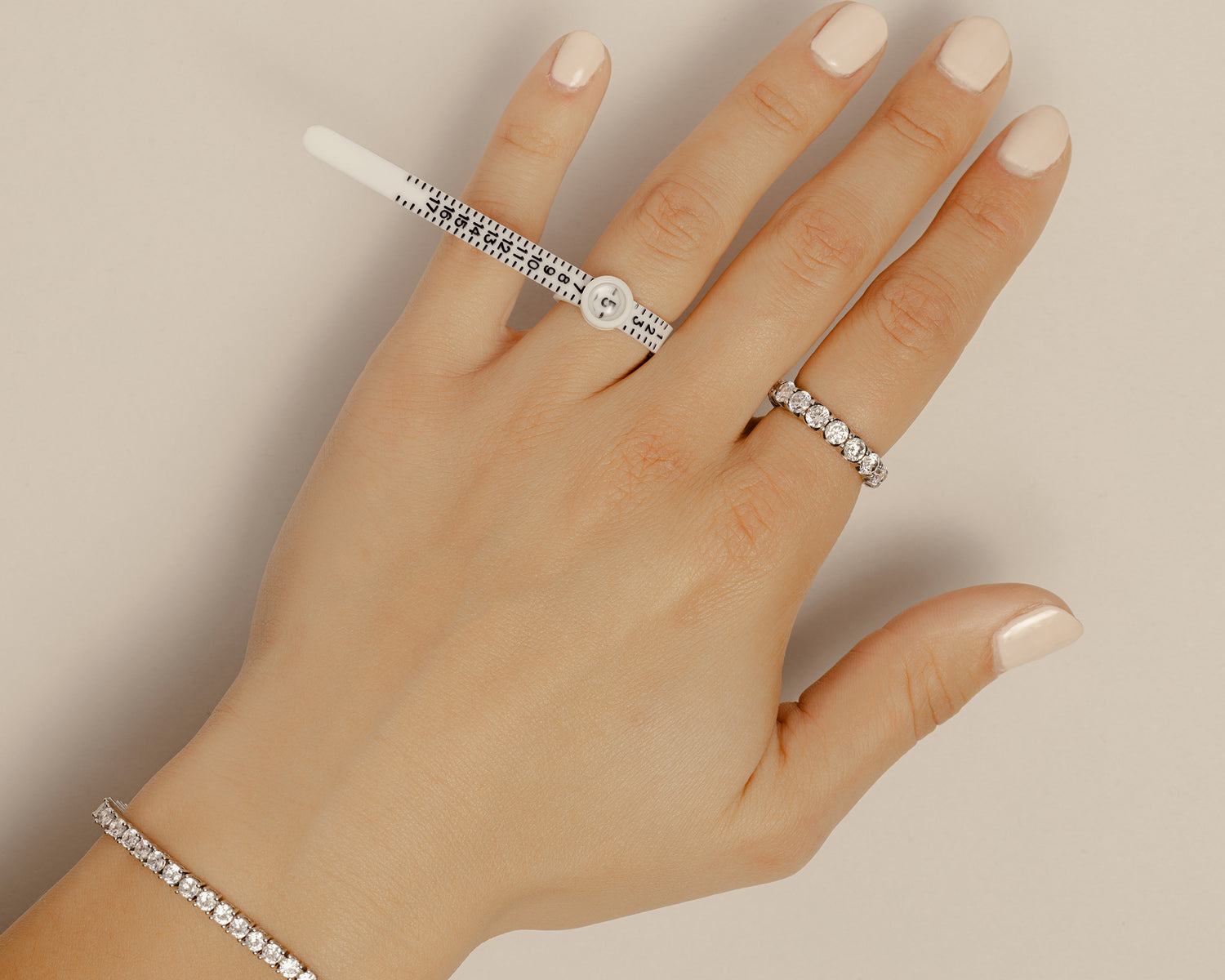
Ring sizer guide
Don't know your ring size? Planning to buy an engagement ring as a surprise? PROUD DIAMOND saves the day – all the details are provided below.

OPTION 1
Use an APP
- Download a Ring Size App on your phone or iPad.
- Place your ring on the phone screen
- Adjust the digital ring sizer to fit well with your ring edge. Then, you will get the right ring size!
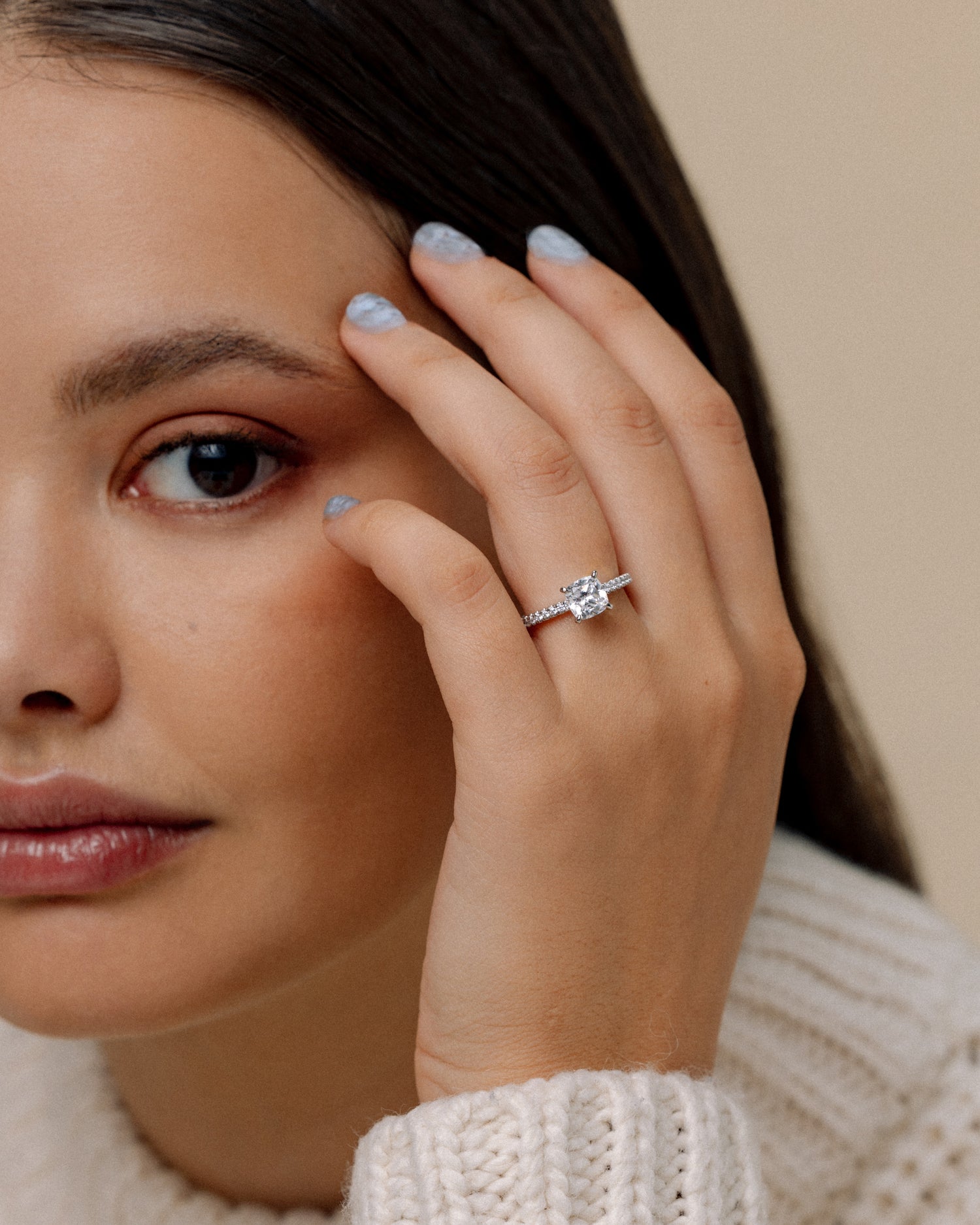
OPTION 2
Measure Ring Size on Your Own
- Wrap a piece of string or a thin strip of paper around the base of your finger where the ring will sit.
- Mark where the string or paper overlaps, and measure the length in millimeters with a ruler.
- Use a ring size chart to determine your size based on the measurement (see at the end of this blog post).
To ensure accuracy, it's a good idea to measure your ring size at least three times, preferably using different methods. This will help you to get an average size. Besides, when in doubt, it's always better to size up rather than down. You can add a ring adjuster if it's slightly bigger.
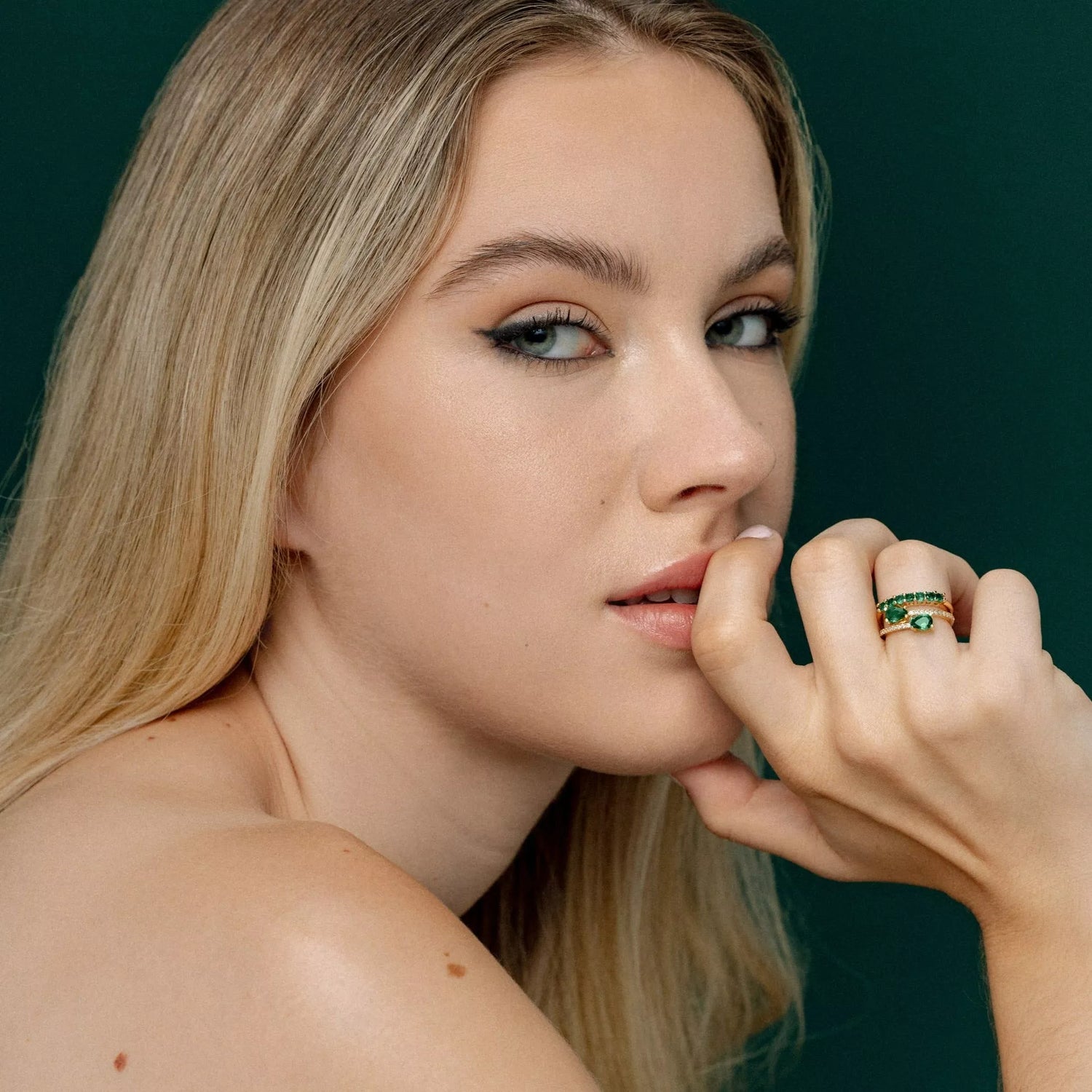
OPTION 3
It’s a Surprise!
If you're aiming for a surprise and need a covert approach, We've got two methods to help you on your quest. First, sneakily borrow one of your girlfriend's rings to determine her size using a ring sizer or an APP. No access to her jewelry? No problem! The average size is a trusty 7. And here's the best part: if the fit isn't spot-on, we offer a complimentary adjustment, ensuring a flawless match. However, if the ring size adjustment range is higher than 1 size up, we are unable to accommodate the adjustment. If you encounter any difficulties in determining the appropriate ring size, please do not hesitate to contact us!
-
Round Cut Pavé Solitaire Engagement Ring
Regular price $2,000.00 CADRegular priceUnit price per -
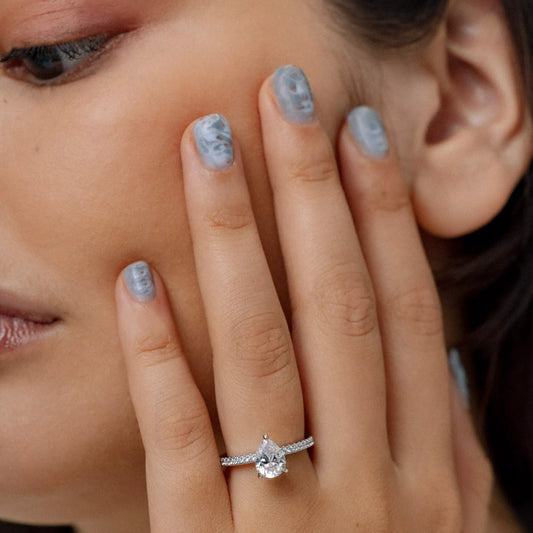
Pear Shaped Engagement Ring With Petite Pavé
Regular price $2,000.00 CADRegular priceUnit price per -
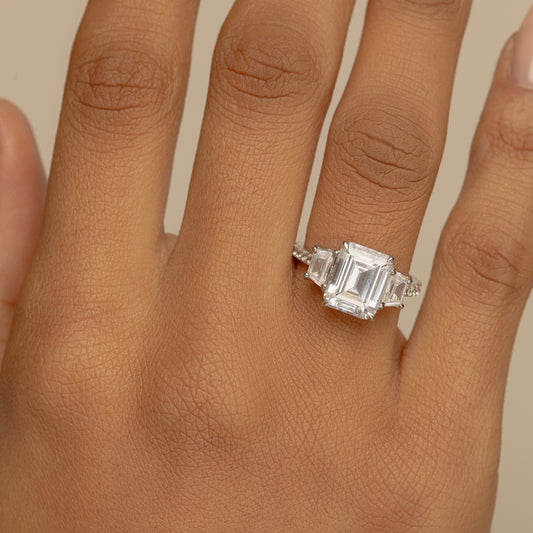
Three Stone Emerald Cut Engagement Ring
Regular price $3,200.00 CADRegular priceUnit price per -
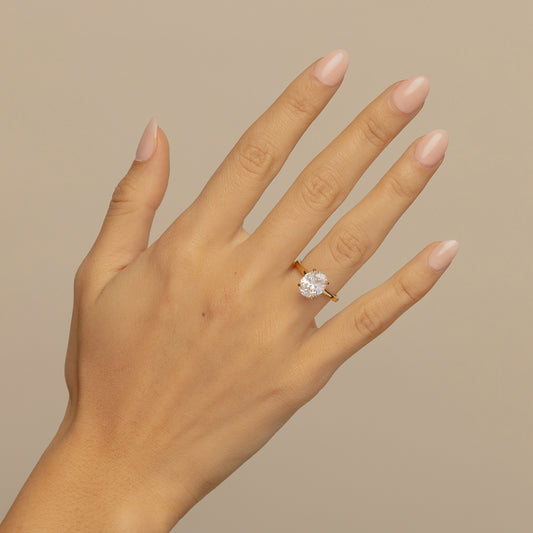
Oval Cut Engagement Ring With Hidden Halo
Regular price $2,000.00 CADRegular priceUnit price per -
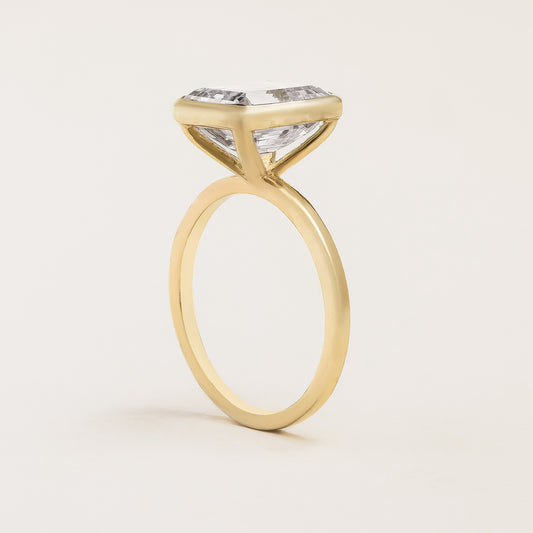
Emerald-Cut Diamond Bezel Engagement Ring
Regular price $1,600.00 CADRegular priceUnit price per -
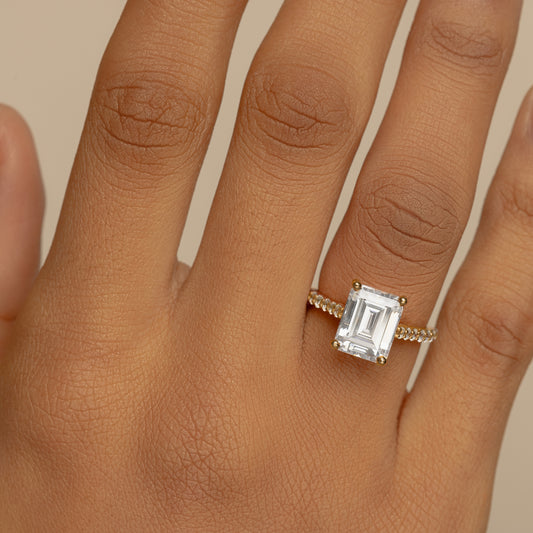
Pavé Emerald Cut Engagement Ring
Regular price $2,000.00 CADRegular priceUnit price per -
FRESHLY RELEASED
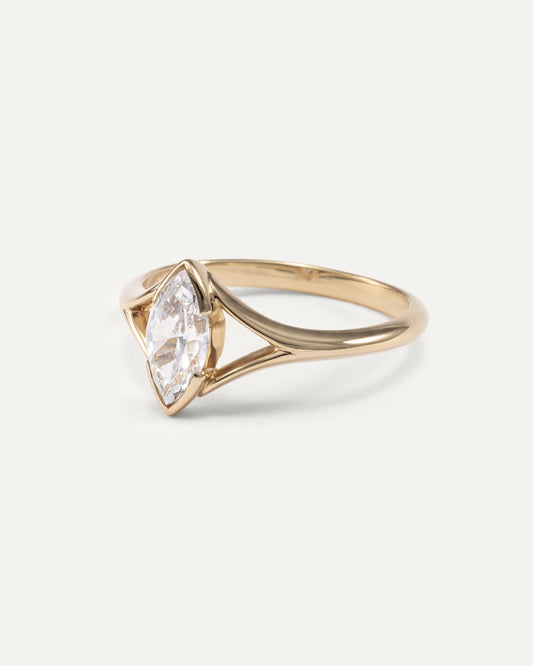
Split shank Marquise Diamond Engagement Ring
Regular price $1,900.00 CADRegular priceUnit price per -
Pear Cluster Engagement Ring
Regular price $2,700.00 CADRegular priceUnit price per -
FRESHLY RELEASED
Portrait cut diamond engagement ring
Regular price $3,600.00 CADRegular priceUnit price per

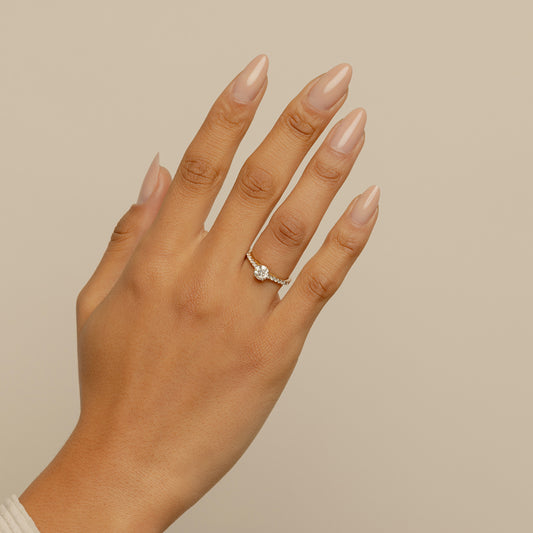








Ring Size Chart Guide
All Proud Diamond rings are offered in standard US/Canada sizes. Use this ring size chart as a reference to compare inner diameter, circumference in millimeters, and international equivalents.
Tips and tricks
- Each finger can be slightly different. Make sure you measure the right finger on the correct hand.
- Measure your finger at normal body temperature. Size can vary with heat, cold, and time of day.
- Measure near the end of the day, when your fingers are usually at their largest.
- If your knuckle makes sizing tricky, measure twice and choose a size that slides over the knuckle without feeling too loose.
- When in doubt, choose slightly larger. The average ring size is often between 6 and 7 for women, and between 9 and 10 for men.
How to choose the right ring size
The right ring size should feel comfortable all day while staying securely in place. If you are between two sizes, we often recommend choosing the half size up, especially for a wider band or if your fingers tend to swell.
1. Measure in millimeters
Wrap a thin strip of paper or string around the base of the finger, mark where it meets, then measure the length in millimeters. Compare that measurement with the size chart.
2. Use an existing ring
Choose a ring that already fits the correct finger, measure its inner diameter, then find the US/Canada equivalent in the chart.
3. Order a ring sizer
For the most accurate measurement, get a ring sizer before choosing an engagement ring, wedding band, or solid gold ring.
Frequently asked questions about ring sizes
How do I measure my ring size at home?
Use a thin strip of paper or string, mark where it meets around your finger, then measure the length in millimeters. Repeat the measurement two or three times to confirm.
What is the average ring size?
The average ring size for women is often between 6 and 7 in US/Canada sizing. For men, it is often between 9 and 10. This is only a general reference: measuring the finger is always the best option.
What should I do if I am between two sizes?
We often recommend choosing the half size up. A ring should pass over the knuckle without being too tight, then stay stable once worn.
Choosing a surprise ring?
Borrow a ring worn on the correct finger, measure its inner diameter, or contact our team for help choosing a safe starting size.
You can also explore our lab diamond rings or our engagement rings with more confidence.
| US/CA | Diameter (mm) | Circumference (mm) | UK/AUS | Japan |
|---|---|---|---|---|
| 3 | 14.0 | 44.2 | F | 4 |
| 3.5 | 14.4 | 45.5 | G | 6 |
| 4 | 14.9 | 46.8 | H | 7 |
| 4.5 | 15.3 | 48.0 | I | 8 |
| 5 | 15.7 | 49.3 | J 1/2 | 9 |
| 5.5 | 16.1 | 50.6 | L | 10 |
| 6 | 16.5 | 51.9 | M | 11 |
| 6.5 | 16.9 | 53.1 | N | 13 |
| 7 | 17.3 | 54.4 | O | 14 |
| 7.5 | 17.7 | 55.7 | P | 15 |
| 8 | 18.2 | 57.0 | Q | 16 |
| 8.5 | 18.6 | 58.3 | R | 17 |
| 9 | 19.0 | 59.5 | S | 18 |
| 9.5 | 19.4 | 60.8 | T | 19 |
| 10 | 19.8 | 62.1 | U | 20 |
| 10.5 | 20.2 | 63.4 | V | 22 |
| 11 | 20.6 | 64.6 | W | 23 |
| 11.5 | 21.0 | 65.9 | X | 24 |
| 12 | 21.5 | 67.2 | Y | 25 |
| 12.5 | 21.9 | 68.5 | Z 1/2 | 26 |
| 13 | 22.3 | 69.7 | Z +1 | 27 |
| 13.5 | 22.7 | 71.0 | — | — |
